Probation periods in the UK
A probation period is a contract term, not a statutory scheme. There is no legal requirement to have one, and the law does not set its length. After one month, statutory notice is at least one week. Failing probation is still a dismissal. Ordinary unfair dismissal still usually needs two years' service in England, Scotland and Wales. GOV.UK and ACAS say that qualifying period is due to become six months on 1 January 2027, and the published timeline says that date can still change.
A probation period is time at the start of a job when you and the new person are both checking the role. Shift teams use one for a new cook, a new supervisor, or a seasonal hire who may stay. The law does not create the period. The contract does. This page keeps that term apart from the unfair dismissal qualifying period, and it says which rule applies today.
The short answer
You do not have to use a probation period. If you do, write the length, the review, the notice, and whether it can be extended. After one month, you cannot give less than the statutory week's notice. Ending the job is still a dismissal, so day-one rights apply. The move from two years to six months is not the rule for a dismissal you make today.
The rule in detail
ACAS, probation periods says there is no legal requirement to have one, and that it can be any length. ACAS also says the Employment Rights Act 2025 does not change that. A contract that says three months, and one that says six, are choices. Neither number is a legal default. "Typical" on this page means lengths contracts often set, not a surveyed share of employers.
Probation is usually for an employee. ACAS says an agency worker, a casual worker, or someone on a zero-hours contract is not likely to be an employee. If you still use the clause, be fair. The hours position is on Zero-hours contracts. The clause does not create guaranteed hours.
There is no statutory length
Put the length in the contract, long enough that the job can be judged. ACAS says six months or less may not fit every role, and that ending probation before unfair dismissal protection starts does not remove other risks. Day-one rights still apply, including the minimum wage, paid holiday and protection from discrimination. The rates are on the minimum wage guide. Hold the review before the period ends.
Notice during probation
Statutory notice is section 86 of the Employment Rights Act 1996. legislation.gov.uk, section 86 says that once continuous employment has reached one month, the employer's notice is at least one week if service is under two years. The employee's notice to you is at least one week after that first month. The contract can give more. A shorter contractual notice gives way to the statutory minimum. The parties can waive notice, or agree pay instead of the person working it.
ACAS, notice when dismissed states the same bands. In the first month the statutory floor has not started, so the contract is what you wrote.
Gross misconduct can end the contract without notice where the conduct really justifies it. An ordinary failed probation is not that case. GOV.UK, dismissal says notice is the contractual period or the statutory minimum, whichever is longer.
Extending or failing probation
Extend only if the contract allows it. Tell the person before the original end date, and say how long the extra time is and what still has to be shown. There is no statutory power to add a month because the review was missed. If the contract is silent, an extension needs agreement. Write down what was agreed.
Failing probation is a dismissal. GOV.UK, dismissal says you need a valid reason you can justify, and that you acted reasonably. The probation label does not replace a conversation where the person can answer.
Today, GOV.UK, eligibility to claim unfair dismissal says employees can usually claim ordinary unfair dismissal only after a qualifying period, usually two years. In Northern Ireland that period is still usually one year. Some claims have no qualifying period, including automatically unfair reasons. Discrimination and whistleblowing are not postponed until probation ends.
The same GOV.UK page says that from 1 January 2027 most employees will be able to claim after six months. ACAS, probation periods says someone who already has at least six months' service on that date is protected then, and others are protected once they reach six months. GOV.UK, Employment Rights Act timeline lists the reduction to six months, for dismissals from 1 January 2027, and the uncapping of compensatory awards. It also says future dates remain subject to parliamentary processes and may change. Do not write the six-month period into a policy as if it already applied.
GOV.UK, dismissal still says an employee with two years' service can ask for written reasons, supplied within 14 days. business.gov.uk, unfair dismissal rights says that from 1 January 2027 that period is also due to fall to six months, the award cap is due to be removed, and the change is for England, Scotland and Wales, not Northern Ireland. A dismissal dated before 1 January 2027 still uses two years. Follow the dismissal page today.
Shift notice in the same Act is a different subject, and it is not a commenced number of days. Read Employment Rights Act shift workers. Do not treat probation, shift notice and the qualifying period as one change that has already happened.
Exceptions
Someone who is not an employee may not have the unfair dismissal right. Do not decide that from a job title. Discrimination and automatically unfair reasons are not delayed until probation ends. Northern Ireland keeps its own qualifying period. During the first month, section 86 has not started. Holiday, the minimum wage and discrimination law have.
Worked example
A cafe hires a cook on 2 November 2026. The contract sets three months' probation and one week's notice from either side. That week matches the statutory minimum once the first month has passed. It does not replace the first month, where section 86 has not imposed it.
A dismissal on 20 December 2026 is before 1 January 2027. The government employer page says the two-year period still applies to a dismissal dated before that day, in England, Scotland and Wales. Discrimination, whistleblowing, and a failure to give the contractual notice, are still live. Hold the meeting.
The probation end falls in early February 2027. A dismissal after 1 January 2027 has to be checked against the six-month rule as GOV.UK and ACAS have stated it, counting that person's service. If the timeline date moves, this example moves with it.
Put the shifts you expect during the period on the week, under their name. A paper file is the staff rota template.
What this means for your rota
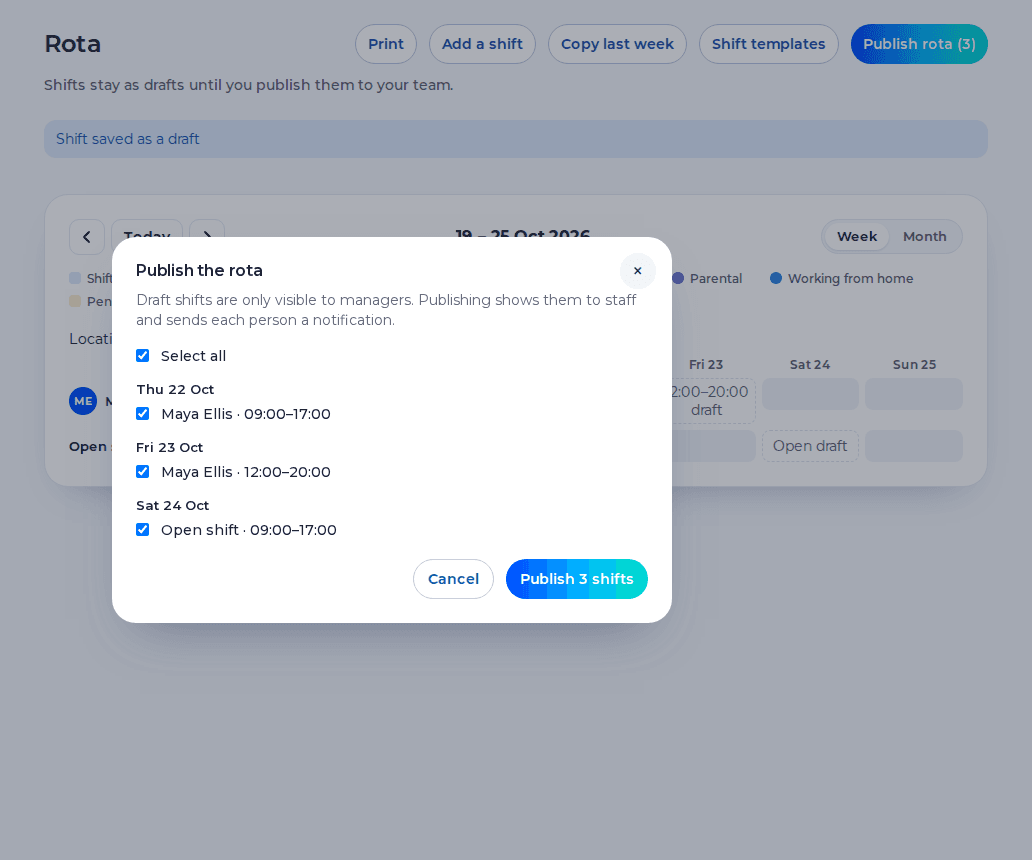
Rota software shows the shifts you gave the person during the period. That record helps a review. It is not a probation workflow, and it does not say whether a dismissal is fair. The first organisation is free for up to 5 staff. The paid plan is £3 per user per month, with a £15 minimum. You can use the paid plan for 14 days before the first payment, and that period does not ask for a card. Shiftbrook does not store a probation decision, calculate notice pay, or apply a qualifying period.
Questions
Is a probation period required by law?
No. ACAS says there is no legal requirement to have a probation period, and it can be any length. It is a term in the contract. The minimum wage, paid holiday and protection from discrimination still apply from the first day.
How much notice applies during probation?
After one month's continuous employment, statutory notice from the employer is at least one week until the person has two years' service, unless the contract gives more. The contract cannot undercut that statutory minimum once it applies. In the first month, that statutory notice has not started, so the contract is what you wrote.
Can I extend a probation period?
Only if the contract allows an extension. Tell the person before the original period ends, and say what the extra time is for and when it ends. There is no statutory right to add time because a review was late.
Does the six-month unfair dismissal rule apply now?
No. GOV.UK still says the qualifying period for ordinary unfair dismissal is usually two years in England, Scotland and Wales, and usually one year in Northern Ireland. GOV.UK and ACAS say a reduction to six months takes effect on 1 January 2027. The timeline says future dates can still change. Do not treat that date as if it had already arrived.
Sources
ACAS, probation periods is the overview, including the 1 January 2027 note. GOV.UK, eligibility to claim unfair dismissal is the qualifying period as it stands, and the six-month line. GOV.UK, Employment Rights Act timeline is the implementation update, including the warning that dates may change. GOV.UK, dismissal is notice and written reasons as they stand today. legislation.gov.uk, Employment Rights Act 1996, section 86 is the statutory notice floor. Checked on 26 October 2026.
Related
The first organisation is free for up to 5 staff. The paid plan is £3 per user per month, with a £15 minimum. You can use the paid plan for 14 days before the first payment, and that period does not ask for a card. An agency pays £5 per active worker per month, with a £25 minimum. Client approvers are free and do not count.
Start free Log inGeneral guidance for UK employers, not legal advice.